Nationwide UK Delivery
 Built in the UK
 Finance available
The difference between a sauna and a steam room is heat and humidity: a sauna is hot and dry, at about 65 to 90°C, and a steam room is cooler but almost fully humid, at about 43°C. Neither is a cure for a cold, and if you are ill the safest choice is to rest at home.
Picture the two. In a sauna the air is dry and hot, the benches are pale timber and sweat arrives slowly. In a steam room you are wrapped in warm mist, the walls are tile and you cannot see the far side. They both leave you pleasantly wrung out, but they feel nothing alike.
This guide explains the differences, whether either helps a cold, how long to stay in and which suits a garden at home. We have been building wood fired hot tubs and saunas in the UK since 2014 and deliver across mainland Britain, so we can speak to the sauna side of the question.

What is the difference between a sauna and a steam room?
A sauna is dry and very hot, a steam room is humid and cooler. Healthline puts a sauna at 150 to 195°F (65 to 90°C) with 5 to 10 percent humidity, and a steam room at about 110°F (43°C) with humidity near 100 percent, so it can feel hotter than the thermometer says (Healthline).
Sauna and steam room compared
| Feature | Sauna | Steam room |
|---|---|---|
| Temperature | About 65 to 90°C | About 43°C |
| Humidity | 5 to 10 percent, dry heat | Close to 100 percent |
| Built from | Unpainted wood | Tile, acrylic or glass |
| Heated by | Wood, electricity or infrared | A generator that turns boiling water to steam |
| Feels like | Hot, dry and sweaty | Warm, damp and heavy |
| Garden option? | Yes, outdoor saunas are made for it | Rarely. Usually built into a bathroom or spa |
Source: Healthline. Figures are typical, not exact.
The takeaway: a sauna is the hotter, drier experience, and a steam room is the cooler, wetter one.
Worth knowing: Higher benches are hotter in both. Healthline notes that personal preference and your needs may decide which you enjoy most.
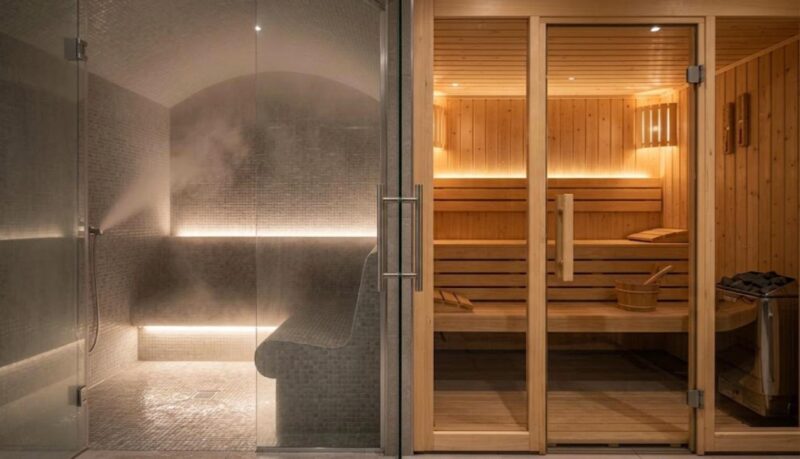
Which is hotter, a sauna or a steam room?
A sauna is hotter on the thermometer, but a steam room can feel hotter. In a sauna you sit in air at 65 to 90°C. In a steam room the air is about 43°C, yet the humidity near 100 percent stops sweat evaporating, so your body struggles to cool and it feels closer than it is.
This is why a steam room can feel oppressive after a few minutes, while a dry sauna at a much higher temperature feels bearable. For the right sauna setting, read our guide to what temperature a sauna should be.
- If you dislike damp heat. Choose a sauna.
- If you dislike very high heat. A steam room, or a sauna at the lower end of its range, may suit you better.
- If you want a bit of both. A traditional sauna lets you add water to the stones for a short burst of steam. Healthline mentions asking before you add water to the rocks.
Worth knowing: Either one can leave you dehydrated. Drink water before and after.
Is a sauna or steam room better for a cold?
Neither is better. If you already have a cold, a sauna is unlikely to help you get better faster, and a steam room will not either. Healthline’s advice is simple: do not use a sauna if you are ill (Healthline).
The South China Morning Post summarises the research: a 2010 randomised trial in the Medical Journal of Australia, with 157 people who had colds, found that breathing hot sauna air made no significant difference to symptoms, and a 2017 analysis of six trials reached similar conclusions about heated, humid air (SCMP). Any relief, such as a warm face, is temporary.
- It will not “sweat out” a cold. The idea is unsupported, and heavy sweating can dehydrate you and make symptoms worse.
- You can pass it on. A shared sauna or steam room means you can infect other users.
- Warmth at home is enough. Rest, fluids and a warm drink do more good.
- See a GP if you get worse. Do not use heat as a treatment for anything serious.
Worth knowing: Do not use a sauna or steam room if you have a fever or feel unwell. If you are unsure, ask your GP.
Can regular sauna use help prevent colds?
Possibly, but the evidence is thin. A small 1990 study in the Annals of Medicine found fewer colds over six months among 25 regular sauna users than among 25 non-users, and a 2017 study of 1,935 men linked frequent sauna use with a lower risk of respiratory conditions (SCMP). The first was small and not randomised, and neither proves cause and effect.
How long should you stay in a sauna or steam room?
In a sauna, no more than 15 to 20 minutes per session, according to our FAQ. Healthline suggests beginners start with 5 to 10 minutes and advises against more than 20 to 30 minutes at a time (Healthline). In a steam room, follow the venue’s guidance and leave as soon as you feel dizzy or overheated.
- Start with a shorter session than you think you need.
- Sit on a lower bench first, because heat rises.
- Leave if you feel dizzy, sleepy or uncomfortable.
- Cool down, drink water and wait a few minutes before another round.
Our guide to what to wear in a sauna covers towels, swimwear and sauna hats, and our outdoor wooden sauna health benefits post looks at why people use saunas regularly.
Worth knowing: People with heart disease, very high or low blood pressure, asthma, epilepsy or who are pregnant should speak to a doctor first. Healthline lists these as reasons to take care, and our FAQ says to check with your GP if you have diabetes, heart disease or a blood pressure condition.
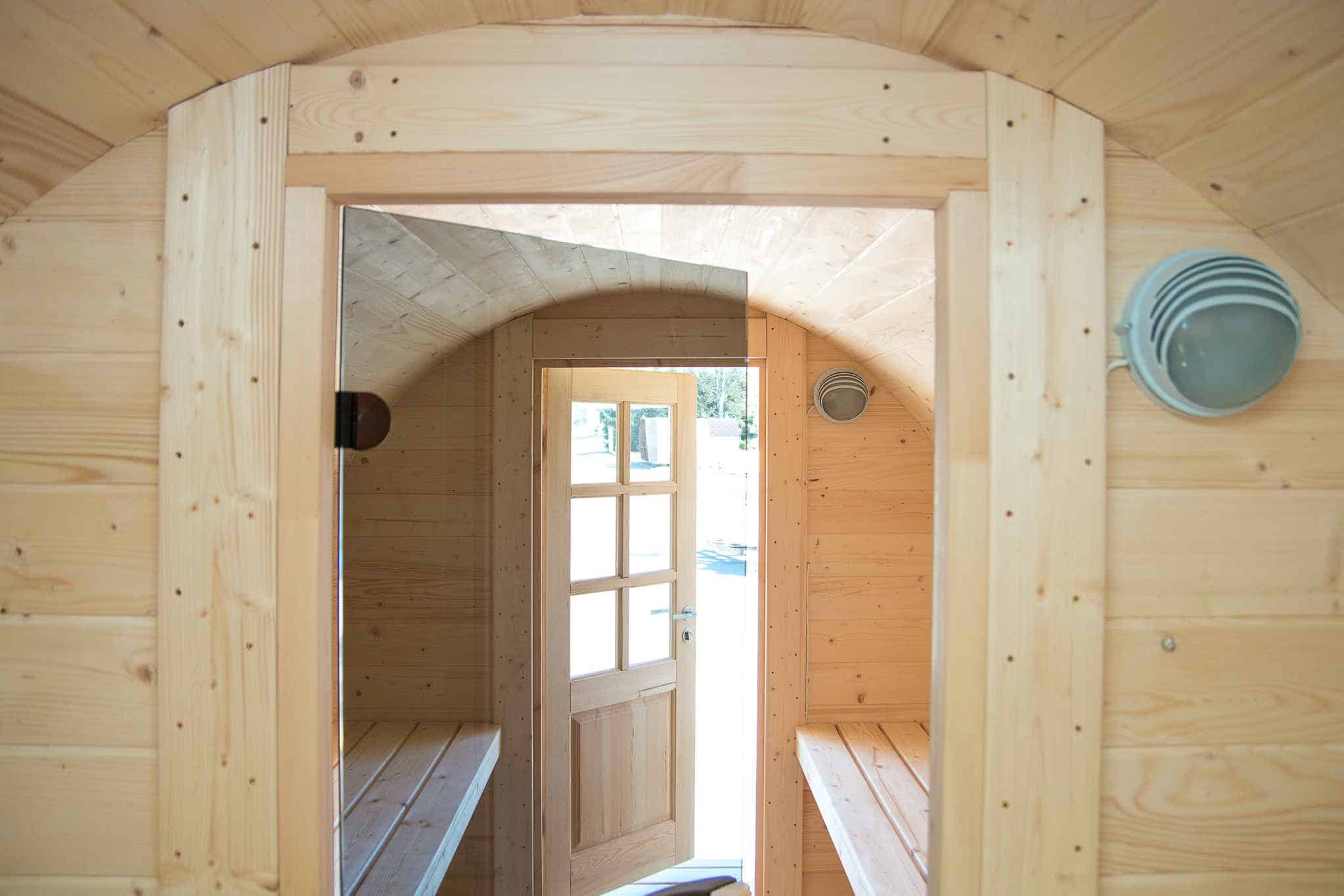
Can you have a sauna or a steam room at home?
You can have a sauna at home, and a garden sauna is the easiest way to do it. A steam room needs a sealed, waterproof room and a steam generator, so it is usually built into a bathroom or spa. We build saunas, not steam rooms.
A traditional sauna gives you the option of a little steam. You add water to the stones for a short burst, and the humidity rises for a moment before it drops again. That is not the same as a steam room, but it covers the middle ground for many people.
- Space. Outdoor saunas sit on a level base, away from the house.
- Heater. Choose electric or wood fired. Electric heaters must be installed by a qualified electrician, which our FAQ says should be arranged before delivery.
- Delivery. Saunas are heavy. Our FAQ says you need a forklift with extended forks or a tele-porter or crane, so plan access first.
- Try first. Sauna hire starts from £175 per day with a minimum hire of 3 days.
Worth knowing: We publish no heat-up times for our saunas, because they depend on size, heater, weather and wood. Ask us which heater suits the cabin you want.
Which Royal Tubs sauna should you choose?
Our three saunas are the Barrel, the Iglu and the Square, each offered with electric or wood fired heaters. The price depends on the size and heater you pick.
Royal Tubs saunas and heater options
| Model | From | Sizes | Electric heaters | Wood fired heaters |
|---|---|---|---|---|
| Barrel Sauna | £7,650 | 160 to 450 cm | 4.5 to 9 kW | 8.5 to 20 kW |
| Iglu Sauna | £8,030 | 160 to 450 cm | 4.5 to 9 kW | 8.5 to 20 kW |
| Square Sauna | £9,200 | Up to 450 cm | 4.5 to 9 kW | 8.5 to 20 kW |
Source: royaltubs.co.uk product pages, October 2026. Prices and options change, so check each product page. The Square Sauna seats up to 6.
The pattern is simple: a bigger cabin needs a bigger heater. If you are unsure which suits you, ask us before you order.
Is a sauna or a steam room right for you?
A sauna suits you if you like dry, intense heat and want something you can have at the bottom of the garden. A steam room suits you if you prefer gentle, damp warmth and have a spa nearby. Neither should replace rest when you are ill.
If you want a sauna, start with our sauna range, read the buyer’s guide or see what owners say in our customer reviews. We offer finance options and delivery across mainland Britain. Once the stove is ticking and the garden is going dark, you will understand the Secret of Royal Tubbing.
Talk to Royal Tubs
If you have a question about saunas, heaters or sauna hire, our team is happy to help.
- Phone. 01536 606040, Monday to Friday 9am to 5pm, Saturday 10am to 1pm.
- WhatsApp. 07310 959595
- Email. info@royaltubs.co.uk
- Showroom, by appointment. Ash Tree Farm, Stoke Albany Road, Kettering, Northamptonshire, NN14 2SP. Book a visit or send a message.
Frequently asked questions
What is the difference between a sauna and a steam room?
A sauna is hot and dry, at about 65 to 90°C. A steam room is cooler, at about 43°C, but humidity near 100 percent makes it feel hotter.
Is a sauna or steam room better?
Neither is better for everyone. Healthline says personal preference and your needs may decide which you enjoy most.
Is a sauna or steam room better for a cold?
Neither. Evidence from a 2010 randomised trial found no significant difference in cold symptoms from breathing hot sauna air, and Healthline says not to use a sauna if you are ill.
Can you use a sauna with a cold?
It is better not to. You may be dehydrated, you can pass the cold on to others, and heat will not cure it. Rest at home instead.
Does a sauna help prevent colds?
Possibly. A small 1990 study found fewer colds among regular sauna users, but it was not randomised, so the evidence is weak.
Is a steam room hotter than a sauna?
No, a sauna is hotter on the thermometer. A steam room feels hot because of its humidity.
How long should you stay in a sauna?
No more than 15 to 20 minutes per session, according to our FAQ. Beginners can start with 5 to 10 minutes.
Can you have a steam room at home?
Yes, but it needs a sealed, waterproof room and a steam generator. A garden sauna is simpler, and a traditional sauna lets you add a little steam with water on the stones.
Is a sauna safe for everyone?
No. Pregnancy, heart disease, blood pressure problems, asthma and epilepsy are reasons to ask your doctor first. Never use one after alcohol.
Can you hire a sauna?
Yes. Our sauna hire starts from £175 per day with a minimum hire of 3 days.