Nationwide UK Delivery
 Built in the UK
 Finance available

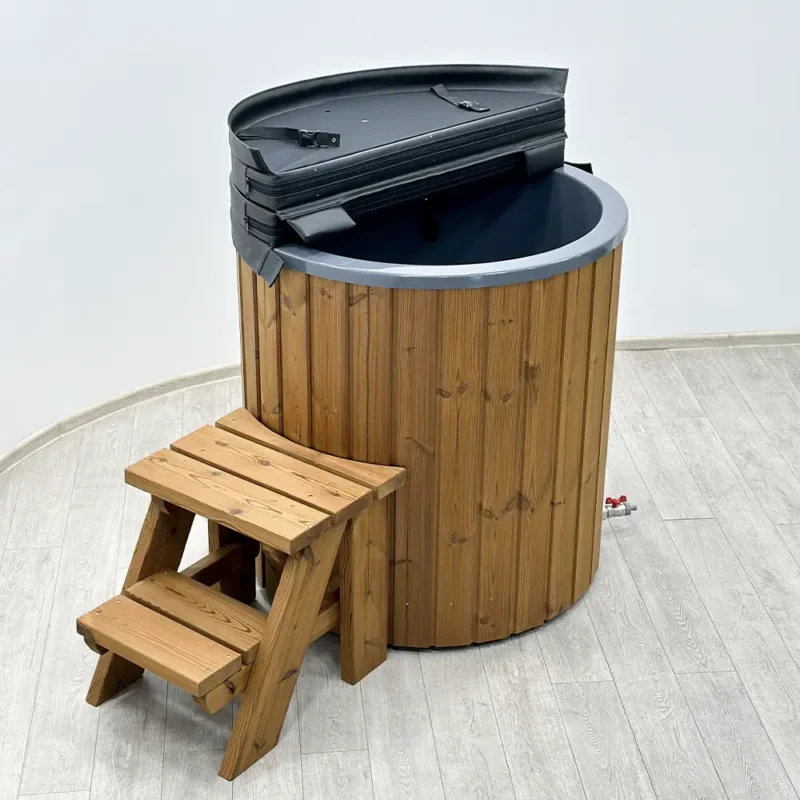
An ice bath at home is worth it if you will actually use it two or three times a week. Research links regular cold water immersion with lower stress, better sleep and less muscle soreness after exercise, and most of that benefit comes from water between 10°C and 15°C for a few minutes at a time. You do not need to sit in freezing water for as long as you can bear.
The first ten seconds are the hard part. Your breath catches, your chest tightens and every part of you wants to stand straight back up. Then your breathing settles, the cold turns into a sharp, clean tingle, and when you climb out a couple of minutes later you feel wide awake for the rest of the morning. Having the tub in your own garden is what turns that from a one off dare into a habit.
This guide covers what the research really shows, how cold the water should be, how long to stay in, the difference between an ice bath and a cold plunge, whether you need a chiller or a few bags of ice, running costs and where to put one. We have built wooden hot tubs, saunas and ice tubs in the UK since 2014, and every figure we quote for our own Ice Tub comes straight from its product page.
What are the benefits of an ice bath?
The best evidence points to lower stress, better sleep, fewer sick days and less muscle soreness after exercise. Ice baths also cause a short rise in inflammation straight afterwards, which is the body reacting to the cold.
The largest recent look at the subject is a 2025 systematic review and meta analysis in PLOS One. It pulled together 11 trials with 3,177 healthy adults who used ice baths, plunges or cold showers at 7°C to 15°C. Stress was significantly lower 12 hours after a cold dip. Sleep quality and quality of life improved, and in one large study people who took cold showers had 29% fewer days off sick. Mood did not change in a measurable way.
For anyone who trains, a meta analysis of nine trials on muscle soreness found cold water immersion worked slightly better than simply resting, with the best results at 10°C to 15°C for 10 to 15 minutes.
What the research says about ice baths
| Benefit | What was found | How strong is the evidence? |
|---|---|---|
| Stress | Significantly lower 12 hours after a cold dip, though not straight away | Moderate, from pooled trials |
| Sleep and quality of life | Improvements reported in individual trials | Early, from a small number of studies |
| Sick days | 29% fewer days off sick among people taking cold showers | One large trial |
| Muscle soreness | Slightly better than passive rest after exercise | Moderate, nine trials |
| Inflammation | A short rise immediately and one hour afterwards | Moderate, from pooled trials |
| Mood | No measurable change | Moderate, from pooled trials |
Sources: PLOS One systematic review, 2025; Machado et al. 2016, Sports Medicine.
Worth knowing: The review authors are clear that the evidence base is still small, with few trials and a narrow range of people tested. Treat an ice bath as a good habit that many people enjoy, not a cure for anything.
Heat has its own set of benefits, and the two work well together. Our guides to sauna benefits and hot tub health benefits cover the warm side of the routine.
How cold should an ice bath be?
Between 10°C and 15°C suits most people and is where the muscle recovery research found the best results. Colder water is not automatically better, and below 10°C you should keep dips short.
Water at 15°C already feels properly cold the first time you get in, so it is a sensible place to start. As you get used to it you can bring the temperature down a degree or two at a time. The chiller on our Ice Tub can hold water anywhere from 3°C to 42°C, so you choose the setting rather than relying on the weather or the ice.
Ice bath temperature guide
| Water temperature | How it feels | Who it suits |
|---|---|---|
| 15°C and above | Cold, with a strong first gasp | First timers and the first few weeks |
| 10 to 15°C | Very cold, breathing needs controlling | Most regular users and post exercise recovery |
| 5 to 10°C | Sharp and intense within seconds | Experienced users, short dips only |
| 3 to 5°C | Close to freezing | Very experienced users, a minute or so at most |
Sources: Machado et al. 2016 for the 10 to 15°C range; Royal Tubs Ice Tub chiller specification for the 3°C minimum. Feel and suitability are our own guidance.
How long should you stay in an ice bath?
Start with one to two minutes and build up slowly. For muscle recovery, the trials with the best results used 10 to 15 minutes at 10°C to 15°C, but you do not need anything like that long to feel the benefit at home.
A useful marker comes from a 2021 study of Danish winter swimmers in Cell Reports Medicine. The swimmers dipped two or three times a week and averaged around 11 minutes of cold water in total across the whole week, alongside about 57 minutes in the sauna. That is a few short dips, not one long endurance test.
Get out straight away if you start shivering hard, your fingers or toes go numb, or you feel dizzy. For most people using a tub at home, 20 minutes is longer than they need and adds risk without adding much benefit.
Is there a difference between an ice bath and a cold plunge?
Not really. Both mean sitting in cold water up to your chest or shoulders, and most people use the two names for the same thing. The difference is usually how the water gets cold.
An ice bath traditionally means a tub of water cooled with bags of ice, so the temperature drifts up as the ice melts. A cold plunge usually means a tub with a chiller that holds the water at a set temperature every day. A cold shower sits further down the scale: easy to do, but you cannot control the temperature in the same way and it rarely gets as cold.
Ice bath, cold plunge or cold shower?
| Ice bath with bags of ice | Cold plunge with a chiller | Cold shower | |
|---|---|---|---|
| Temperature control | Drifts as the ice melts | Set and held, 3°C to 42°C on our chiller | Whatever comes out of the tap |
| Effort each time | Buy, carry and tip in ice | None, it is ready when you are | None |
| Ongoing cost | Ice for every session | Electricity for the chiller | Water only |
| Best for | Trying it out, occasional use | Using it several times a week | A quick start before buying a tub |
Sources: Royal Tubs Ice Tub product page; our own comparison.
Do you need a chiller, or will bags of ice do?
Bags of ice are fine if you only plan to use the tub now and then. If you want to get in several times a week, a chiller pays for itself in time saved, because the water is always at the temperature you set.
It helps to see how much ice you would need. To cool about 300 litres of water from 15°C to 5°C, each kilogram of ice soaks up roughly 355 kJ as it melts and warms up, and the water has to lose about 12,500 kJ. That works out at around 35kg of ice every time you start from scratch, and more in summer.
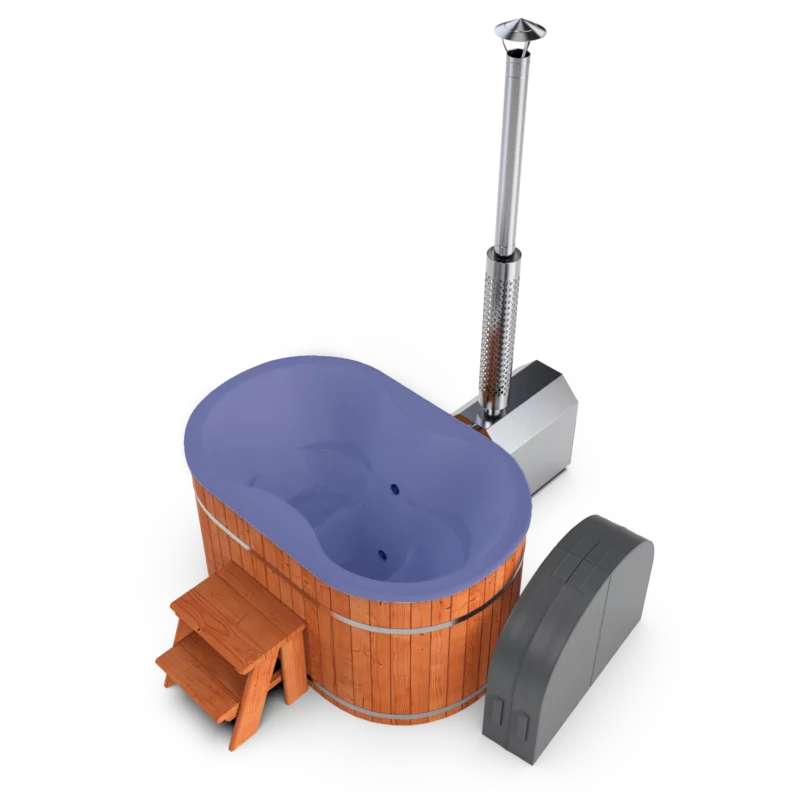
The chiller we fit to the Royal Tubs Ice Tub is a 710W unit with built in filtration, a UV light and a circulation pump. It cools 200 litres from 23°C to 3°C in about 4.2 hours, and it can also warm the water up to 42°C, so the same tub works as a warm soak in summer. It connects to WiFi, so you can set the temperature from an app on your phone.
Worth knowing: You can order the Ice Tub with the chiller included, or choose chiller connections only and add a chiller later. Both options are priced on the product page.
How much does an ice bath cost to buy and run?
Our Ice Tub starts from £2,500, and adding the chiller costs £2,000 on top. Running costs then come down to the electricity the chiller uses.
From the chiller’s own figures, a 710W motor running for 4.2 hours uses roughly 3kWh to bring 200 litres down from 23°C to 3°C. Multiply that by the unit rate on your energy bill to see the cost of a full cool down. You can check the current capped unit rate on the Ofgem energy price cap page. Once the water is cold, the chiller only needs to top the temperature up.
Two options help keep that figure down: an insulated lid (£400) and full wall and floor insulation (£150). Both stop the water picking up heat from the air and the ground. If you would rather spread the cost of the tub itself, finance is available.
Royal Tubs Ice Tub prices and options
| Item | Price |
|---|---|
| Ice Tub (base price) | From £2,500 |
| Chiller included | +£2,000 |
| Chiller connections only | +£150 |
| Insulated lid | +£400 |
| Full walls and bottom insulation | +£150 |
| Wood plastic cladding | +£300 |
| LED lighting | +£150 |
Source: Royal Tubs Ice Tub product page, November 2026. Prices can change, so always check the product page.
Where should you put an outdoor ice bath?
Put it on a firm, level base close to an outdoor power socket, ideally in shade and near the back door. A full tub is heavy, so decking or slabs need to take the weight evenly.
Our Ice Tub weighs about 100kg plus the chiller, and roughly 300 litres of water adds around another 300kg, so you are looking at 400kg or more once it is full. A concrete pad, paving slabs or a strong timber deck all work. If you need a new outdoor socket for the chiller, use a qualified electrician; in England, new outdoor circuits come under the building regulations for electrical work.
Shade matters more than people expect. Direct summer sun warms the water and makes the chiller work harder. If you already have a garden sauna or a wood fired hot tub, putting the ice tub a few steps away makes it far easier to go hot and cold.
How do you use an ice bath safely?
Get in slowly, keep your breathing long and steady, and keep your first sessions short. If you have a heart condition or high blood pressure, speak to your GP before you start.
The British Heart Foundation explains that entering very cold water can trigger a “cold shock”, which raises your heart rate and blood pressure and makes you gasp for breath. That reaction is strongest in the first minute, which is why a slow, controlled start matters more than how long you stay in.
- Lower yourself in gradually rather than jumping in.
- Breathe out slowly through your mouth for the first 30 seconds.
- Have someone nearby for your first few sessions.
- Keep your head and hands out of the water if you are new to it.
- Never use an ice bath after drinking alcohol.
- Get out if you feel dizzy, numb or start shivering hard.
- Afterwards, dry off, put on warm layers and move around to warm up naturally.
Worth knowing: If you are pregnant, have a heart condition, high blood pressure or Raynaud’s, or take medication that affects your circulation, check with your GP or midwife first. This guide is general information, not medical advice. Our guide to hot tubs and pregnancy covers the warm side of the same question.
Can you pair an ice bath with a sauna or hot tub?
Yes, and many owners find it the most enjoyable way to use one. Going from heat to cold and back again is often called contrast therapy, and it is how saunas have been used in Finland and Scandinavia for generations.
The Danish winter swimmers in the Cell Reports Medicine study combined both, with around 11 minutes of cold water and 57 minutes of sauna heat each week. A simple routine at home is 10 to 15 minutes in the sauna, one to three minutes in the ice tub, then a rest, repeated two or three times. Our guide to sauna temperatures explains how to set the hot side, and what to wear in a sauna covers the rest.
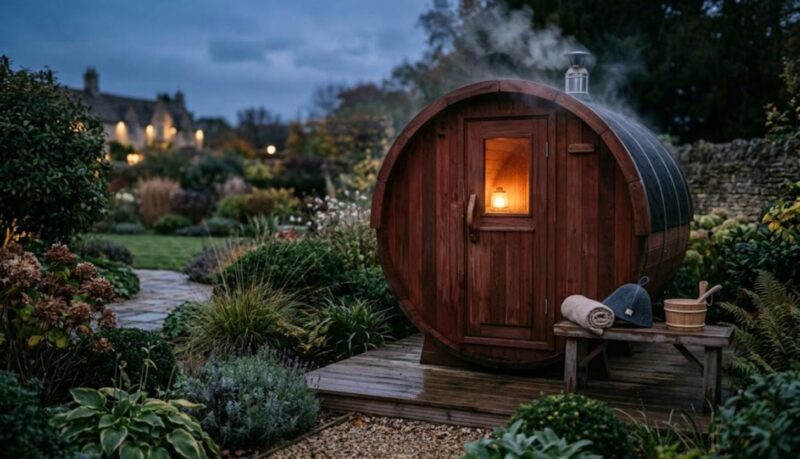
If you do not have a sauna yet, our Barrel Sauna is the most popular partner for an ice tub, and the Iglu and Square saunas suit larger groups. A wood fired hot tub works too if you prefer a warm soak to dry heat.
Not sure whether dry heat or steam suits you better? Our comparison of a sauna or a steam room explains the difference. For a warm soak, our guide to hot tub temperatures gives the safe range, and how wood fired hot tubs work explains the heating. You can also try a sauna first with our sauna hire service before you commit to buying one.
What should you look for in a home ice bath?
Look for good insulation, a proper lid, a chiller with filtration and an easy way to drain it. A tub that is pleasant to look at also helps, because it will sit in your garden all year.
Here is how our Ice Tub is built, taken from its product page:
- 100cm external diameter and 86cm inside, holding around 300 litres.
- Fibreglass gelcoat liner in anthracite, white or blue, which is smooth and easy to clean.
- Thermowood outer panels in Scandinavian A class timber, or wood plastic cladding as an option.
- Insulated leather spa cover with straps.
- Two tier wooden steps and a high flow drain tap.
- Optional chiller with filtration, UV light and WiFi control.
Every tub is finished in your choice of Thermowood, Teak or Weathered Charcoal cladding. Our user manual explains water care and cleaning, and you can see what other customers say on our testimonials page.
Is an ice bath at home worth it?
For most people who will use it a few times a week, yes. The research is still growing, but lower stress, better sleep and quicker recovery after exercise are all reasonable things to hope for, and the habit is far easier to keep when the tub is a few steps from your back door.
If you only want to try it, start with cold showers or a few bags of ice. If you already know you love it, or you have a sauna or hot tub and want the full hot and cold routine, a chilled tub like our Ice Tub is the simplest way to have cold water ready every day. Call us on 01536 606040 or send us a message and we will help you choose the right setup.
Frequently asked questions
Is a 2 minute ice bath good?
Yes. Two minutes in water around 10°C to 15°C is a sensible session for most people, and plenty of regular users never stay in much longer.
Is 20 minutes in an ice bath too long?
For most people at home, yes. The muscle soreness research found the best results at 10 to 15 minutes, and staying in longer adds risk without adding much benefit.
What should you not do after an ice bath?
Do not jump straight into a very hot shower or drive while you are still shivering. Dry off, put on warm layers and let your body warm up naturally.
Can you take an ice bath every day?
Many people do, but you do not need to. The winter swimmers in the Danish study dipped two or three times a week.
What temperature is a cold plunge?
Most people use 10°C to 15°C. Our chiller can hold the water anywhere from 3°C to 42°C.
Do ice baths help you sleep?
Some trials have found better sleep quality after regular cold water immersion, but the evidence is still early.
Do ice baths help with weight loss?
There is no good evidence that ice baths cause weight loss. The Danish study found winter swimmers produced more heat in the cold, but it could not show that the swimming caused it.
Can I use my ice tub in summer?
Yes. With the chiller it stays cold on hot days, and it can also warm the water up to 42°C if you want a warm soak instead.
How do I keep the water clean?
The chiller has built in filtration and a UV light, and a lid keeps out leaves and dirt. Our user manual covers the rest of the water care.
Do you deliver across the UK?
Yes, we deliver across mainland Britain. See our shipping page for details, or pay monthly with finance.