Nationwide UK Delivery
 Built in the UK
 Finance available

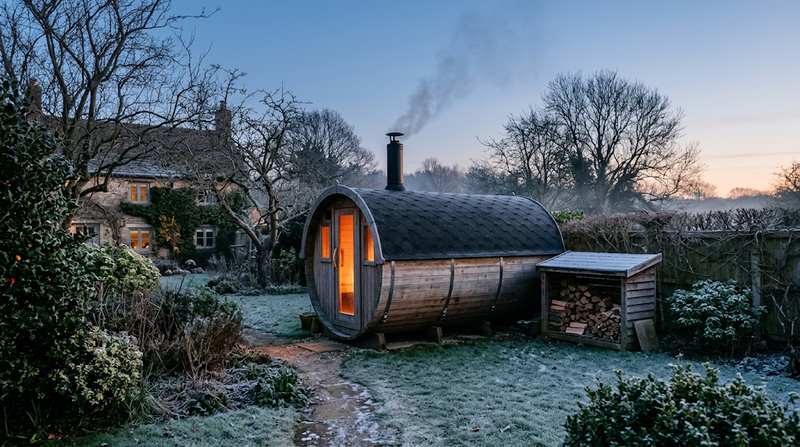
Choose a wood fired sauna if you want the crackle of a real fire, a softer traditional heat and no need for a big electrical supply. Choose an electric sauna if you want to press a button, or start it from your phone, and walk into a hot sauna with no logs to carry. Both reach proper Finnish sauna temperatures, and on every Royal Tubs outdoor sauna you can pick either.
For most people the decision comes down to how they want the evening to feel. Lighting a stove, watching the flames through the glass and adding a log between rounds is part of the ritual for some owners. Others want the sauna hot and waiting after a long day, with nothing to do but open the door.
This guide compares the two side by side: how the heat feels, what each heater costs to buy and run, what you need to install, the rules on burning wood, and which suits your garden. We have built outdoor saunas and hot tubs in the UK since 2014, and every price here comes from our own product pages.
What is the difference between a wood fired and an electric sauna?
The sauna room is the same; only the heater changes. A wood fired sauna has a stove you load with logs, with a chimney through the roof. An electric sauna has a heater wired into your mains supply, often with a control panel or WiFi.
Both heaters warm a pile of sauna stones, and both let you throw water on the stones for a burst of steam, which the Finns call löyly. Our Barrel, Iglu and Square saunas can all be ordered with either type.
Wood fired or electric sauna at a glance
| Wood fired sauna | Electric sauna | |
|---|---|---|
| Heat source | Logs burned in a stove | Electric elements |
| What you need | A chimney and dry, seasoned wood | A dedicated circuit fitted by an electrician |
| Starting it | Light the stove and keep it fed | Press a button, or use an app on WiFi models |
| Feel | Crackling fire, soft and traditional | Steady, even and easy to control |
| Best for | Gardens far from the house, lovers of ritual | Regular use and quick sessions |
Sources: Royal Tubs sauna product pages; our own comparison.

Which feels better, wood fired or electric heat?
Many sauna lovers say a wood fired sauna feels softer and more natural, while an electric heater gives a steadier temperature that is easier to control. Neither is wrong; it is a matter of taste.
What makes the biggest difference to how a sauna feels is often the stones, not the fuel. A heater with a large mass of stones holds heat well and gives a gentler, longer lasting steam when you add water. On our saunas, for example, the electric HUUM Hive Mini holds 150kg of stones and the wood fired HUUM Hive holds 90kg to 130kg, so you can have a stone heavy heater with either fuel.
Our guide to what temperature a sauna should be explains how to set the heat, and what to wear in a sauna covers towels and sauna hats.
How much does a wood fired or electric sauna heater cost?
On our saunas, electric heaters start from £450 for a Harvia Vega and wood fired heaters from £1,250 for a Harvia M3. The sauna itself starts from £7,650 for the Barrel, £8,030 for the Iglu and £9,200 for the Square.
Sauna heater options and prices on the Royal Tubs Barrel Sauna
| Heater | Type | Power | Price shown |
|---|---|---|---|
| Harvia Vega | Electric | 4.5, 6, 8 or 9kW | £450 |
| Harvia Cylindro | Electric | 9kW, with display or WiFi options | £650 to £1,150 |
| HUUM Drop | Electric | 6 or 9kW, 60kg of stones | £850 to £1,650 |
| HUUM Hive Mini | Electric | 6 or 9kW, 150kg of stones | £1,350 to £2,200 |
| Harvia M3 | Wood fired | 13kW, 40kg of stones and chimney set | +£1,250 |
| Harvia 20 PRO | Wood fired | 20kW, 40kg of stones and chimney set | +£1,750 |
| HUUM Hive | Wood fired | 13 or 17kW, 90 to 130kg of stones, chimney set | £2,000 to £2,500 |
Source: Royal Tubs Barrel Sauna product page, November 2026. Prices can change, so always check the product page before you order.
The wood fired options include a chimney set, which is part of why they start higher. On the electric side, the extra cost buys you a display, WiFi control or a heavier load of stones. If you would rather spread the cost, finance is available.
Which is cheaper to run, a wood fired or an electric sauna?
It depends on what you pay for electricity and for logs. An electric heater uses up to its rated power while it heats, so a 9kW heater running flat out for an hour uses up to 9kWh, and less once the room is hot and the thermostat starts cycling.
To work out an electric session, multiply the heater’s kW by the hours it runs, then by the unit rate on your bill. You can check the current capped unit rate on the Ofgem energy price cap page. For a wood fired sauna, the cost is your logs. If you can buy seasoned wood in bulk or have your own supply, a wood fired sauna can be very cheap to run.
Worth knowing: Whichever you choose, a well insulated sauna with a closed door heats faster and holds its heat longer, which saves fuel either way.
Do you need an electrician or a chimney?
An electric sauna needs a dedicated electrical supply fitted by a qualified electrician. A wood fired sauna needs no electrics at all, but it does need its chimney fitted safely with clear space around it.
Most sauna heaters need their own circuit from your consumer unit, and in England new circuits like this fall under the building regulations for electrical work, so ask your electrician for the certificate. A wood fired sauna avoids all of that, which is why it is popular at the far end of large gardens and on land with no power.
Can you have a wood fired sauna in a smoke control area?
Possibly, but you need to check first. In a smoke control area in England you can only burn wood in an exempt appliance approved by Defra, and you can be fined if your chimney gives off smoke.
The government’s guide to smoke control area rules explains what is allowed, and your local council can tell you whether your address is in one. If it is, an electric sauna is usually the simpler choice.
Wherever you live, burn only dry wood. Defra’s Burn Better, Breathe Better advice is to use wood with a moisture content of 20% or less, and in England wood sold in bags of under 2 cubic metres must be certified Ready to Burn. Our FAQ on what firewood to use has more tips.
Which is easier to use and look after?
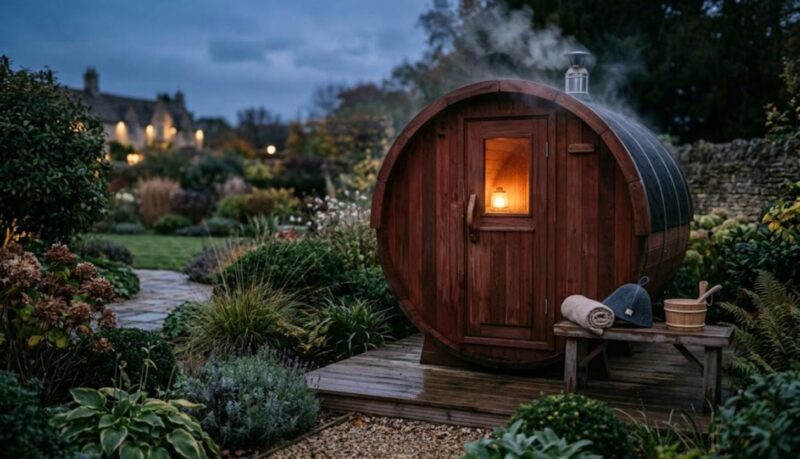
An electric sauna is easier day to day: switch it on, wait, and go in. A wood fired sauna takes a little more effort, as you light the stove, feed it and clear the ash afterwards, but many owners enjoy that part.
- Electric: check the stones every so often and replace any that crumble.
- Electric with WiFi: start the heat from your phone so the sauna is ready when you get home.
- Wood fired: empty the ash regularly and keep a stack of dry logs under cover.
- Wood fired: check the chimney and its seals before each winter.
- Both: wipe the benches with mild soapy water and leave the door open to dry after use.
Our guides to maintaining a wooden home sauna and the user manual cover the rest.
What size of sauna heater do you need?
It depends on the size of the sauna and how many rooms it has, which is why our heaters come in several outputs, from 4.5kW electric up to 20kW wood fired. A heater that is too small struggles to reach temperature on a cold day; one that is too big wastes fuel.
Our Barrel Sauna comes in lengths from 160cm to 450cm, with up to three rooms on the larger sizes. Tell us the size you are choosing and how you plan to use it, and we will match the heater. You can send us a message or call 01536 606040.
Is a wood fired sauna better for an off grid garden?
Yes. If there is no power where you want the sauna, a wood fired heater is the obvious choice, because it needs no electricity to reach full temperature.
It is also a good match for a wood fired hot tub: both run on the same logs, and many owners light the two together for a full evening outdoors. Our guide to how wood fired hot tubs work explains the hot tub side, and you can finish with a cold dip in an ice bath.
Wood fired or electric for a holiday let or glamping site?
Electric is usually the safer bet for guests, because there is no fire to manage and you can set limits on the temperature and timer. A wood fired sauna can be a real selling point for a rural cabin, but guests will need clear instructions and a supply of dry logs.
Think about who will be using it. Experienced sauna fans often book a stay because of a wood fired sauna, while families and first timers tend to prefer the simplicity of a button. Our guide to hot tubs for holiday lets covers practicalities such as cleaning between guests and insurance, much of which applies to saunas too.
Worth knowing: If you run a holiday let, check with your insurer before adding any wood burning appliance, and keep a record of chimney checks.
Wood fired or electric sauna: which should you choose?
Choose wood fired if you love the ritual of a real fire, want a traditional feel, or have no power where the sauna will sit. Choose electric if you want convenience, use the sauna often, or live in a smoke control area.
Either way, the sauna itself is the same. Browse our outdoor saunas to choose the shape, then pick the heater that suits how you live. Not ready to buy? Try one first with our sauna hire service, or read about the benefits of a sauna and how a sauna compares with a steam room.
Frequently asked questions
Is a wood fired sauna better than an electric one?
Neither is better for everyone. Wood fired suits people who enjoy a real fire and a traditional feel; electric suits people who want convenience and quick, regular sessions.
Can you put water on the stones of an electric sauna?
Yes, most electric sauna heaters are built to take water on their stones. Always follow the heater maker’s guidance.
Does a wood fired sauna need a chimney?
Yes. Our wood fired heaters come with a chimney set, which must be fitted with safe clearance around it.
Do I need planning permission for a garden sauna?
Most garden saunas count as outbuildings and do not need planning permission, but there are limits on height and position. See our FAQ on bases and planning permission.
Can I switch from electric to wood fired later?
The heater and chimney are planned when the sauna is built, so it is best to decide before you order. Talk to our team if you are unsure.
What wood should I burn in a sauna stove?
Dry, seasoned wood with a moisture content of 20% or less. Never burn treated or painted timber.
How many kW does a garden sauna need?
Our heaters range from 4.5kW to 20kW. The right size depends on the sauna and the number of rooms, and we match it when you order.
Can I control an electric sauna from my phone?
Yes, if you choose a heater with WiFi, such as the Harvia Cylindro or HUUM models with WiFi.
Is a wood burning sauna healthy?
A properly installed stove sends smoke up the chimney, away from the room. Burn only dry wood, keep the door seals in good order and follow the heater instructions.
Do you deliver saunas across the UK?
Yes, we deliver across mainland Britain. See our shipping page for details, or pay monthly with finance.